
Dracut City Directory Collections
Dracut historical directories are a shelf of related publications, not one uninterrupted municipal book. The Dracut Preservation Plan and Survey inventories the Historical Society holdings and identifies both stand-alone Dracut titles and six-town Lowell Suburban volumes. That difference matters when a surname is absent from a title that looks right. The broad books cover Billerica, Chelmsford, Dracut, Tewksbury, Tyngsborough, and Westford, while some volumes put Dracut in a separate department. Start with the closest known year, record the full title, and retain the page reference with the name.
| Collection | Years | Where Held | Access |
|---|---|---|---|
| Lowell Suburban Directory | 1896-97 | Dracut Historical Society | Historical Society shelf |
| Dracut Directory | 1898-99, 1900-01, 1911-12, 1915-16 | Dracut Historical Society | Historical Society shelf; 1898-99 digitized |
| Lowell and Lowell Suburban titles | 1905, 1913-14, 1925, 1927, 1930, 1930-31 | Dracut Historical Society | Historical Society shelf |
| Polk Lowell and Lowell Suburban | 1940-41, 1942, 1946, 1949-67 selected volumes | Dracut Historical Society | Historical Society shelf; 1946 has address index |
The located shelf reaches a 1967 Polk volume, but no official source established that as the final Dracut directory ever printed. A missing year can instead be a publication gap, a different Lowell title, or a department filed under another town heading. The Dracut Library local-history documents add town reports, minutes, and the 1850 vital-record volume to the same research trail.
Dracut Directory Titles in Lowell
Lowell’s industrial growth and its long connection with surrounding towns help explain the changing title pages. Dracut may appear as the stand-alone Dracut Directory, as a Dracut department within the Lowell Suburban Directory, or in a Lowell Directory. The names are not interchangeable shorthand. They identify the publication that a researcher must request or open. Search both Dracut and Lowell Suburban descriptions before treating a negative result as a disappearance from town.
The title pattern also affects address work. A directory might use a shorter road form, omit the word “street,” or place a household among a wider six-town sequence. Middle initials, spouse notation, road abbreviations, and the full publication title are useful controls. The official town history places Dracut in the Merrimack and Lowell orbit, while the directory shelf preserves that regional publishing structure.
Note: Keep the title, year, page, and locality heading together so a later comparison does not turn a Lowell-area listing into an unsupported Dracut match.
1898 Dracut City Directory
The earliest specific Dracut run located is the 1898-99 Dracut Directory, published by Henry M. Meek and held in two Historical Society copies. It follows the 1896-97 Lowell Suburban volume and precedes the 1900-01 Sampson, Murdock & Co. run. This makes the digitized 1898-99 book a sensible first scan when a family is known to be in town near the turn of the century. It should still be read as a historical listing, not proof of title or a present address.
The digitized 1898 directory at Internet Archive preserves the opening material and abbreviation key used to interpret the entries.
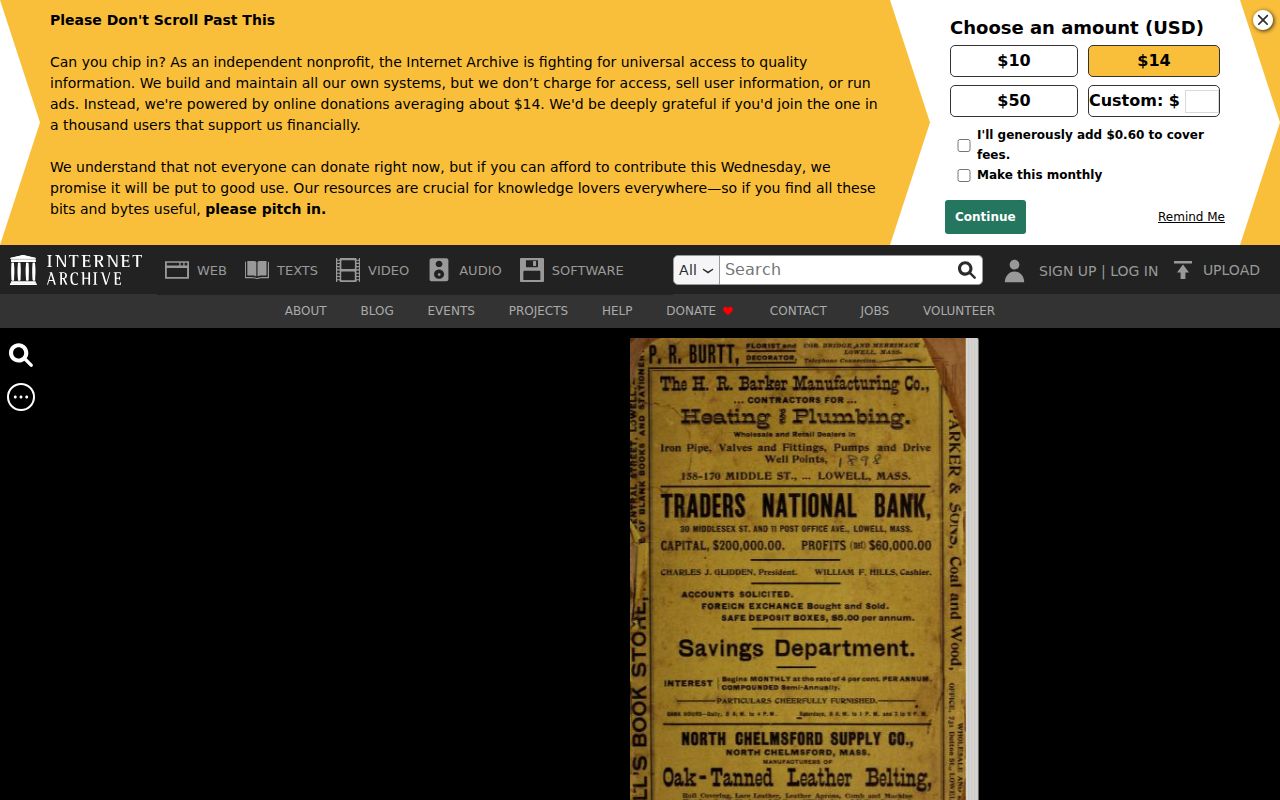
The scan makes it possible to check the book’s own key before deciding what an abbreviated residence, business, or movement notation means.
Dracut City Directory Publisher Timeline
Publisher changes give the Dracut city directory shelf texture. Henry M. Meek appears on the 1898-99, 1911-12, 1913-14, 1915-16, 1925, and 1927 material. Sampson, Murdock & Co. appears on 1900-01, the 1905 Dracut department, and the 1930 Lowell Directory. Naumkeag Directory Co. covers the 1930-31 Lowell Suburban volume. R.L. Polk & Co. carries the later located sequence.
- 1896-1905: Lowell Suburban and stand-alone Dracut books establish the early located run.
- 1911-31: Meek, Sampson, Murdock, and Naumkeag titles alternate between Dracut and Lowell-area formats.
- 1940-42: Polk’s Lowell Suburban volumes return the six-town context.
- 1946: Polk’s Lowell City Directory adds a reverse Street/Address Index.
- 1949-67: selected Polk volumes form the strongest located later shelf.
Those dates describe located volumes, not annual coverage. A household can be absent because an edition was not held or did not appear, as well as because the household moved.
Dracut City Directory Shelf Access
The Dracut Library genealogy and local-history service is the best first contact for collection referral and related databases. It offers Ancestry Library Edition for in-library use, FamilySearch affiliate access, NewspaperArchive, historical books, town reports, and minutes. It also lists Vital Records of Dracut Massachusetts to 1850. Staff do not conduct legal, tax, medical, microform, or obituary research, so a useful request names the year or shelf item needed and leaves the detailed work to the visitor.
The library’s genealogy service information describes the in-library and affiliate access routes that can support a directory finding.

Use a directory name, year, and address as search terms when moving from a printed listing to a licensed database or local-history book.
The Dracut Historical Society and Museum, at 1660 Lakeview Avenue, holds the directories alongside town reports, tax rolls, maps, and genealogy shelves. It lists 978-957-1701 and Sunday hours from 1 to 3, excluding holidays and July and August; private tours are by appointment. The Preservation Plan inventory is the evidence for those historical shelves. For a wider fallback, the Massachusetts State Library holds city and town directories, reverse guides, tax valuations, Sanborn maps, and newspapers.
Reading a Dracut City Directory Entry
Historical entries are compact. The 1898-99 key and the directory schema support a careful inventory: a person’s name, a spouse or household notation when printed, an occupation or business role, an address, and any boarder, owner, employer, widow, removal, or movement notation that the particular directory uses. Do not add fields that the line does not print. A directory entry describes a publication’s reporting, and a deed remains the source for a title transfer.
| Name and household | Person name, with spouse or household notation where the book prints it. |
|---|---|
| Role or business | Occupation, employer, business role, or business location where stated. |
| Address | House number and abbreviated road form, with “street” often omitted after the road name. |
| Residence notation | Boarder, owner, widow, removal, or movement detail only when printed in that run. |
- Criss-cross directory
- An address-first section, usually organized by street and number, that can lead from a historical address to a surname.
- Householder index
- The alphabetical people portion of a directory, used to confirm a surname found through a street or address route.
- Abbreviation key
- The book’s own explanation of shortened words. It should be read before interpreting an entry because meanings vary by volume.
In the digitized key, Agt means agent, b or bds means boards, ave means avenue, PO means post office, and rms means rooms. It also records that “street” is dropped after a street name. That key is part of the evidence, not decorative front matter.
The library’s local-history holdings page identifies the nearby books, reports, minutes, and vital-record title that can test a detail from a directory entry.
These holdings supply a local route for checking a surname, family event, or town record without treating the directory alone as conclusive.
1946 Dracut Directory Address Story
A rare address route. The 1946 Polk’s Lowell City Directory has a reverse Street/Address Index, a rare direct route from an old Dracut street and number to an occupant surname. Start in the street guide, carry the abbreviated street form and number into the alphabetical section, then read the household line in full. The reverse result identifies a historical occupant or business at that address. It does not establish ownership, and it should never be merged with a current assessment name without separate evidence.
This method is especially useful when a family story starts with a house rather than a person. The 1946 result can supply the surname needed for an alphabetical entry, a deed search, or a census comparison. The reverse index is an address tool inside a historical city directory, not a substitute for a legal land record.
Note: Preserve the street spelling exactly as printed, because an abbreviated road form can be the reason a later name search fails.
Trace Dracut City Directories by Year
Follow a household through the located Dracut city directory years rather than assuming the shelf is annual. The published sequence gives an address and occupational snapshot; federal census schedules give a household composition snapshot. Both can be valuable, and their dates can differ. Federal schedules for 1900, 1910, 1920, 1930, 1940, and 1950 are the relevant pairing points, subject to the federal 72-year release rule for newer schedules.
- Find the closest directory year and record the title, page, name spelling, address, and every abbreviation.
- Check the alphabetical entry after any address-first result and note spouse or business language as printed.
- Move backward through the located 1942, 1940-41, 1930-31, 1930, 1927, 1925, and earlier runs, retaining gaps rather than inventing continuity.
- Pair the directory year with the nearest available census and label a date or address conflict instead of choosing one without evidence.
- Use deeds for ownership, town vital records for life events, cemetery records for burial, and probate for heirs when those questions arise.
A disappearance can mean a move, death, unlisted household, variant spelling, or publication gap. NewspaperArchive and the Lowell Sun route can provide a notice lead, but the library does not promise obituary research. For an older government, census, naturalization, or probate route, the Massachusetts Archives digital catalog offers text, collection, result-count, and date controls. It complements the local shelf rather than replacing it.
Dracut Directory Gaps Need Labels
The Historical Society also holds town reports from about 1832 to the present, with a nearly complete run from 1900, and tax rolls for 1842-49 and 1861-93. Those sources can add a taxpayer or civic context when the directory shelf has a gap. They are not the same kind of evidence as a household listing, and they should be cited by their own title, year, and page. The same care applies to flat-file maps, development plans, and genealogy files.
Dracut’s record keepers are distributed among the Town Clerk, Historical Society, Library, Registry, and state repositories. Write down which one supplied each fact. A tax roll may identify a taxpayer, a directory may identify a household, and a deed may record legal title. Keeping those labels separate makes a family history more reliable and leaves unanswered questions visible for the next shelf check.